Loyalty Program Maturity Scale: How to Evolve from Basic Rewards to a Strategic Growth Engine
Most loyalty programs follow a similar storyline: an enthusiastic launch, quick initial growth, and then a long plateau that feels stable on the surface but usually signals something else – stagnation, rising costs, operational complexity, and a growing gap between expectations and real business impact.
Brands often assume that the mechanics are the issue. In reality, the challenge usually lies elsewhere: in fragmented data, disconnected channels, and a lack of strategic positioning. Loyalty is not built on points or perks but on the ability to use data, technology, and experience design as one integrated system.
This article outlines the five stages of loyalty program maturity and shows how brands can evolve from a simple rewards scheme to a business engine with measurable impact on P&L.
Understanding the Stages of Loyalty Program Growth
A maturity model highlights how a program creates value and how effectively it can shape customer behavior. Moving upward isn’t about adding more features or complicated tiers – it’s about aligning data, channels, technology, and organizational ownership around a single goal: sustainable customer growth. This doesn’t always require massive, multimillion-customer databases. Even seemingly simple programs for local or niche brands can function as sophisticated engines of business growth when designed with the right strategy, personalization, and real-time engagement.
The 5 Stages of Loyalty Program Maturity
.png)
Stage 1: Transactional – Loyalty Program as Revard and Incentive Channel
„Points and perks”
This is the entry point for most programs: simple points, universal discounts, and communication that treats all customers the same. Data is basic and limited to transaction history. The program becomes an add‑on to the shopping experience – pleasant, but rarely influential.
Although this stage delivers quick wins, it does not build loyalty. It is where many brands begin, and unfortunately, where many remain. The program generates cost, but its ability to increase frequency or customer lifetime value is limited.
In this case, the program works as a simple “bonus”: the customer receives points or discounts for purchases, and the company feels that it is doing “something” about loyalty. From your bisness perspective it might become a silent margin killer. Usually, there is a lack of personalization and consistent data. The program is an addition – a nice one, but it does not really affect retention. Many brands start here and... never move on from it.
Stage 2: Segmented – Loyalty Program as Tool Aimed at the Best Bustomers
„Everything works, but nothing is connected”
At this level, the program becomes more structured. Communication starts to differentiate between customer groups, demographic data is introduced, and new channels, such as a mobile app, expand the program’s reach.
From the outside, the program can appear quite mature. Many elements still function separately. Channels remain loosely connected, personalization is fairly surface-level, and decisions are rarely guided by deeper data analysis. The program is organized and maintained, yet not actively steered. It keeps customers engaged, but rarely delivers meaningful incremental value.
There are visible improvements. Segmentation emerges, communication becomes more structured, and the program begins to operate across more channels. Customer activity increases, but the use of data remains limited and the overall experience lacks consistency.
This stage often creates the impression that the program has reached a comfortable level of maturity. In practice, it mostly maintains engagement rather than generating real, strategic value.
Stage 3: Analytical – Loyalty Program as a Customer Insights Center
“The program starts thinking like a business”
This is the stage where real transformation begins. Behavioral insights move to the forefront, and data becomes a strategic resource rather than just a record of past activity. Brands introduce a Unified Customer Profile, often supported by a CDP, which allows them to see the customer as one consistent individual across touchpoints. Campaigns are no longer tied to a fixed calendar but respond to what customers actually do. Communication becomes coherent across channels, creating a more natural and relevant experience.
At this point the program starts to influence decisions in a way that is both predictable and measurable. It no longer focuses solely on rewarding actions after they happen. Instead, it begins to guide behavior and gently steer customers toward desired outcomes. The organization itself also evolves. Decisions rely less on intuition and more on evidence drawn from real customer data. Systems exchange information, actions become contextual, and communication reflects a deeper understanding of customer needs and timing.
This is when the program becomes truly intelligent. It stops simply reacting to behavior and begins to actively shape it.
Stage 4: Predictive – Loyalty Program as a Real Time Growth Engine
„Loyalty as a growth engine”
At this stage, the program moves beyond analysis and begins to anticipate customer needs. Predictive models, Next Best Offer engines, dynamic journeys, and real-time decisioning make communication more contextual and timely. The program can recognize moments of opportunity before the customer takes action and adjust incentives accordingly.
Loyalty shifts from a primarily operational role to a clear driver of revenue growth. Rather than waiting for behavior to occur, the program actively guides it, using data and predictive insights to influence decisions at the right moment.
Stage 5: Strategic Ecosystem / Experience‑Led – Loyalty Program as a Major Business Advantage on the Market
Only a small percentage of companies reach this stage. Here, loyalty extends far beyond a traditional program and begins to function as a business model. It includes partnerships, retail media, subscription layers, experiential value exchange, and advanced data collaboration. Customer profiles are no longer limited to a single brand but reflect behavior across a broader ecosystem.
Ownership and governance move to the C-suite, and the program’s impact becomes visible in the company’s P&L. Loyalty evolves into one of the organization’s most valuable strategic assets, scalable, difficult to replicate, and deeply embedded in the brand’s ecosystem.
At this level, loyalty is built around experiences, partnerships, emotions, and technology working together. Predictive models and advanced analytics support decisions, and the program has a clear, measurable influence on revenue and long-term growth. This stage remains rare, but it is where the strongest competitive advantages emerge.
Why Is It Worth Moving to a Higher Level of Loyalty Program Maturity?
Investing in the development of a loyalty program pays off because each step up in maturity amplifies its real impact on customer behavior and business results. As programs become more advanced, they rely less on discounts and promotions and more on delivering value, meaningful experiences, and data-driven insights.
Even the most well-designed mechanics won’t deliver value without continuous program evolution. Loyalty does not come from points or rewards alone. It emerges from leveraging data effectively, designing exceptional experiences, and personalizing interactions at scale.
Moving a program to a higher stage is not just an “upgrade” of mechanics. It strengthens the business as a whole – enabling smarter decisions, reducing operational costs, and generating predictable, scalable growth that extends far beyond the program itself.
CEE Reality – Why the Shift from Stage 1 to Stage 3 Is Especially Critical in Central & Eastern Europe
Markets across Central and Eastern Europe operate under unique constraints: lower ARPU, smaller IT and marketing budgets, and a strong price‑promotion culture that drives short‑term sales but erodes margins over time. In this environment, Stage 1 loyalty programs—simple, transactional, discount‑driven schemes – quickly become financially unsustainable and offer little strategic value. Because brands cannot out‑discount their competitors indefinitely, the real opportunity lies in moving toward Stage 3, where data, behavioral insights, and unified customer profiles begin to replace blanket promotions. For CEE brands, this shift is not just a natural progression but a competitive necessity: it enables them to break out of the discount trap, build differentiation through personalization rather than pricing, and turn the loyalty program into a growth‑driving asset rather than a cost center. Companies that make this leap gain resilience against price wars and unlock measurable improvements in customer value – advantages that matter disproportionately in cost‑sensitive CEE markets.
Common Roadblocks in Loyalty Program Development
Progression through the maturity curve is rarely linear. Many brands stall between Stage 1 and Stage 2, thinking they have achieved enough. Others reach Stage 3 but struggle to operationalize predictive decisioning due to organizational silos or fragmented technology. And nearly all underestimate the level of governance required for Stage 5.
The primary blockers include:
- fragmented data that cannot support real-time insight,
- pressure for discounts instead of value exchange,
- channel‑centric rather than customer‑centric organization,
- over‑reliance on manual campaigns instead of automated journeys,
- slow technology unable to orchestrate dynamic decisions,
- teams working in silos (CRM ≠ marketing ≠ retail)
- internal misalignment around goals, KPIs, and ownership.
Higher maturity means the program gains control over customer behavior rather than simply reacting to purchases. Decisions are guided by evidence, communications are contextual, and actions are timely and relevant. In contrast, a lower-maturity program primarily based on discounts often erodes margins and fails to build genuine loyalty. It generates activity but not long-term value. Advanced programs drive measurable improvements in key metrics: customer lifetime value rises, purchase frequency increases, and loyal customers capture a larger share of sales. All of this translates directly into the company’s P&L. At their most mature, programs function like integrated systems – using real-time data, connecting multiple channels seamlessly, and automating decisions to optimize outcomes.
Overcoming these barriers requires far more than adding new mechanics or launching another tier. Real progress comes from disciplined, methodical work on architecture, governance, and capability building – the foundations that allow a loyalty program to scale from reactive to predictive and, eventually, autonomous.
From Diagnosis to Buy‑In: Gaining Internal Support for Program Growth

Most companies overestimate the level of development of their program – often assuming that if “everything works,” then the program is advanced. In practice, an analysis of the maturity table quickly shows where the program has really stalled. Just as important as the diagnosis is how to present these findings within the organization and how to convince key stakeholders to invest in the next stage.
Different teams – management, marketing, CRM, retail, IT – have different expectations and concerns, so developing the program requires building a common business narrative. Leadership needs to understand how maturity impacts P&L and competitive advantage. IT needs confidence that the proposed architecture is stable and feasible. Marketing wants tools that enhance efficiency without adding complexity. Finance requires clarity on costs, returns, and risk exposure. Retail teams want simplicity and a seamless operational experience.
A strong internal case for loyalty maturity requires translating insights into a narrative that resonates with each audience. It requires reframing the conversation from “improving the program” to “unlocking trapped value in customer relationships.” It also requires showing that the cost of stagnation is higher than the cost of transformation.
Referring to our guide, “How to communicate and convince different stakeholders to a loyalty program (or its changes)” you can more effectively justify why moving to a higher stage of maturity brings measurable financial, operational, and strategic benefits, and how to tailor the message to the needs of each group.
How to Move Your Loyalty Program to the Next Level
Moving up the maturity curve is a structured process. It requires clarity about what currently limits growth, where the program should evolve next, and which foundational investments generate the highest long‑term impact. Programs mature when they stop relying on manual execution and disconnected activities, and start functioning as integrated systems capable of learning, reacting, and optimizing in real time.
Key Steps in the Journey
- From historical data to real‑time insights
Most programs entering the maturity journey rely heavily on retrospective reporting: monthly dashboards, static RFM models, and manual segmentation. While helpful, historical data tells you what happened – not what is happening or what will happen next. Transitioning to real‑time insights means creating a data environment where the program can detect meaningful signals instantly: a drop in activity, a shift in category preference, an at‑risk customer, an emerging behavioral pattern. When brands operate in real time, the loyalty program responds within the moment – not weeks later. This shift enables contextual communication, dynamic offers, and journeys that adapt continuously to customer behavior. Real‑time insights move the organization from reacting to past events to shaping future ones.
- Organizing and integrating the technology architecture
No program can reach predictive or strategic maturity if its systems remain disconnected. Fragmented POS data, an isolated CRM, misaligned e‑commerce feeds, and a mobile app that operates as a separate universe create an ecosystem where meaningful insights are impossible. Moving to the next stage of maturity requires building an integrated architecture that consolidates all touchpoints: transactions, digital interactions, in‑store behaviors, loyalty engagement, and customer profiles. Integration does not mean buying more tools; it means ensuring that existing ones can communicate seamlessly. Only with a cohesive architecture can a loyalty program support consistent omnichannel experiences, real‑time decisioning, and unified orchestration across physical and digital environments.
- Automation and journeys
Manual campaigns are among the biggest hidden costs in loyalty management. Every manually prepared newsletter, push notification, or upsell offer represents a one‑time effort that does not scale. As the customer base grows, manual work grows exponentially — and eventually becomes unsustainable. Automation changes this dynamic entirely. When journeys are automated, the program can run hundreds of personalized paths simultaneously, each triggered by specific customer actions or lifecycle signals. This reduces operational load, ensures consistency, and significantly increases the relevance of communication. Automation is not about efficiency alone; it is about freeing the team to focus on strategy and experimentation rather than execution. In mature programs, automation becomes the backbone of scalable value creation.
- Shifting from “discount exchange” to “value exchange”
Early‑stage loyalty programs often rely on discounts because they deliver quick results and require minimal sophistication. But over time, discounts erode margins, commoditize the brand, and attract customers who are not loyal — only opportunistic. Moving to the next maturity stage requires redefining the value proposition so that customers stay not for the savings, but for the relationship. Value exchange can take many forms: early access, personalized recommendations, exclusive products, priority services, experiential rewards, community participation, or meaningful recognition. These forms of value build emotional loyalty, not transactional dependency. The shift away from discounts is a hallmark of maturity – not because incentives disappear, but because they become smarter, more targeted, and less financially draining.
- Building partnerships and ecosystems
No mature loyalty program grows in isolation. As brands evolve, they expand their value proposition through partnerships that complement their core offering. This may include cross‑industry collaborations, partner earning and redemption networks, subscription layers, or shared data ecosystems. Partnerships extend the program’s relevance, allowing customers to earn and redeem value across a broader range of everyday behaviors. They also enable new revenue streams, such as retail media or partner-funded rewards. Ecosystem thinking transforms the program from a brand‑centric initiative into a multi‑brand platform – significantly increasing its strategic importance and defensibility. When programs reach this stage, they stop competing on discounts and start competing on holistic value, convenience, and experience.
How Does Upgrading a Loyalty Program Work in Practice?
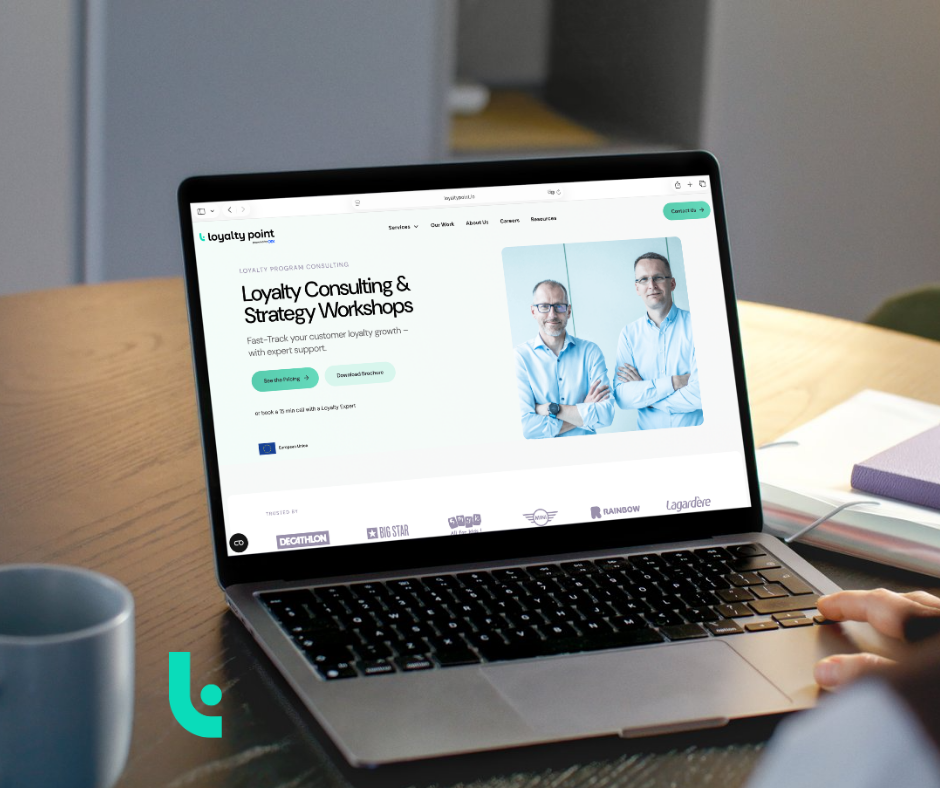
Many organizations already have elements of a mature program: data, channels, technology, but need help combining them into a coherent and measurable strategy. That is why the “Unlocking Loyalty Potential” workshop was created, which guides brands step by step through maturity assessment, gap identification, and the definition of specific next steps.
What Market Leaders Do Differently – Examples of Loyalty Program Evolution in Practice
The most successful loyalty programs share a common thread: rather than competing on discounts, they focus on advanced personalization, ease of use, and real-time engagement – a trend confirmed by global studies from Deloitte and Merkle. Market leaders build loyalty through experiences rather than promotions, because, according to industry reports, the absence of meaningful, emotional engagement is one of the main reasons for retention drops.
Several brands provide clear examples of how programs can evolve to deliver strategic value:
- Shell Go+ (UK)
Shell completely redesigned its program, moving away from a points-based system toward a simple, mobile-first earn-per-visit model. Shell Go+ delivers instant benefits, personalized “surprise rewards,” and a fully digital customer experience. The program no longer just rewards fueling; it strengthens the overall relationship with the brand.
- Benefit Cosmetics Mobile‑First Personalization Strategy
Benefit transformed its loyalty program into a full-fledged engagement engine. A mobile-first approach enables dynamic benefits, real-time personalization, and behavior-driven communication, significantly increasing both engagement and emotional connection with the brand.
.png)
- Alaska Airlines – Atmos Rewards (combine Mileage Plan + HawaiianMiles)
Alaska Airlines strategically merged two separate loyalty systems into a single, streamlined ecosystem. Atmos Rewards introduces more flexible rewards, simpler mechanics, stronger partner integration, and clearer, more appealing communication for a broad customer base.
These examples demonstrate that true leaders prioritize technology integration, deep personalization, and a clear value proposition. Their programs become strategic tools that drive meaningful business outcomes, rather than just marketing add-ons.
What Happens When a Loyalty Program Truly Matures
A mature loyalty program is not a cost. It is a revenue engine. It increases retail frequency, improves customer lifetime value, strengthens basket economics, reduces churn, and creates a deeper, more resilient relationship between brand and customer.
It also enhances operational efficiency. Manual work turns into automated orchestration. Insights become accessible in real time. Decisions become more consistent and more profitable. Teams collaborate more effectively because the program becomes a shared strategic asset rather than a departmental initiative.
Most importantly, a mature program gives the organization a predictable mechanism for influencing customer behavior – something very few companies truly possess. It becomes a defensible advantage, not easily copied, because it is built on integrated data, technology, and experience that competitors cannot replicate overnight.
When loyalty matures, it transforms the business model. It becomes a long-term engine of growth – measurable, scalable, and strategically essential.