Long-distance Loyalty Run. How Do You Keep Up the Pace Over the Long Term While Running a Loyalty Program?

Loyalty today is undergoing a profound transformation. Modern consumers expect relevance, instant value, emotional resonance, and seamless omnichannel experiences – far beyond traditional earn-and-burn mechanics. Loyalty programs increasingly operate not as marketing add-ons but as long-term strategic assets that shape revenue predictability, customer lifetime value, and competitive differentiation.
Brands that treat loyalty programs as campaigns or promotional tactics often struggle with stagnation, declining engagement, and an inability to prove ROI. Those that thrive, however, approach loyalty as a marathon requiring pace, planning, adaptation, and endurance.
How much of a long-term game is a loyalty program?
In traditional sales and marketing activities, success is often measured by immediate results. A campaign performs well? Conversion rates increase. A new ad goes live? Website traffic spikes.
Loyalty programs operate differently. Their primary goal isn’t to generate a quick, one-time uplift in sales, but to build repeatability, predictability, and an emotional connection between the customer and the brand. It’s a long-term process.
Just like running a marathon, the starting line is only symbolic. What truly determines success is:
- consistency,
- stability,
- the right communication rhythm,
- and pacing that matches participant expectations.
Companies that expect instant results often fall into a common trap: they judge the program after just three months, even though its real potential typically becomes visible after 12–24 months – once participants begin making repeated, predictable purchasing decisions. Most programs reveal their potential only after months of regular engagement. Loyalty is created by accumulated moments, not immediate incentives.
At the same time, it’s important to acknowledge that loyalty programs can generate meaningful short-term benefits when designed with data in mind. Even at the setup stage – or ahead of a major program evolution – brands gain deeper visibility into their customer base, learning which incentives drive behavior and which fall flat, often using historical transactional data as a foundation. These insights don’t just optimize the program itself; they inform broader commercial, pricing, and product decisions across the organization. In this way, loyalty becomes both a strategic investment and a powerful learning engine for the entire business.
Even the most successful programs require continuous evolution because customer expectations change rapidly – driven by technology, economic pressures, and value alignment. For example, 79% of global consumers now expect brands to align with their values, and instant rewards increasingly outperform rigid point systems.
Thus, just as marathon runners adjust their strategy to changing terrain and conditions, loyalty programs must evolve beyond one-off promotions.
If you want to dive deeper into how loyalty programs evolve through defined stages of maturity, you can explore the full progression in article Loyalty Program Maturity Scale — How to Evolve from Basic Rewards to a Strategic Growth Engine.
The Risks of Taking a Short-term View of Customer Loyalty
Although loyalty is a marathon, many companies still treat their programs like short sprints – a mindset that not only limits their potential but can actively damage long‑term performance. Lack of evolution is never neutral. A poorly managed loyalty program can accumulate hidden costs that grow faster than the member base itself. These risks typically appear on three levels.
First – the cost of ineffective promotions. Misaligned mechanics can lead to excessive discounting, unnecessary reward expenses, or incentivizing purchases that customers would have made anyway. As a result, the company does not generate incremental revenue; it simply pays more for outcomes that would have occurred regardless.
Second – wasted budgets. Without clear benchmarks and proper analytics, the loyalty budget shifts from an investment to an unmanageable cost center. Communications target the wrong segments, benefits become irrelevant, and the operational overhead of the program generates expenses without delivering measurable return.
Third – cannibalization effects. This is one of the most underestimated risks. Promotions run within a loyalty program may shift sales from naturally high‑performing periods into promotional windows, creating the illusion of growth that disappears once the campaign ends. Even more problematic, poorly set reward mechanics can cannibalize high‑margin product sales by driving customers toward discounted or lower‑margin items.
Just as choosing the wrong pace in a marathon inevitably leads to burnout, a poorly managed loyalty program can reduce profitability, distort analytical insights, and erode organizational confidence in the value of loyalty itself. Only by understanding that doing nothing is not a safe status quo – but a source of long‑term damage – do companies become ready for meaningful strategic change.
Understanding the Real Effects of Loyalty Before Setting up the Performance Metrics
Theoretically, every organizer aims to see the number of participants in a loyalty program grow and the program itself become more and more popular. However, this entails increasing expenses. The better one works with the program and the larger the base of regular customers becomes, the higher will be the cost of communication, or the cost of the promotions implemented. If there are no well-defined ways to measure the benefits of a loyalty program, it may seem that the solution only generates more and more financial needs. Therefore, in order to understand the impact of the loyalty program on the business, it is essential to establish clear and understandable methods for measuring the effectiveness of the activities introduced. This way, at the end of each day, you can show what the results are, or, in a worse case, you can understand what the lack of results is due to.
What matters is not just taking measures that are attractive to the consumer, but being able to count them and present the financial effects in a way that is clear and understandable to the entire organization. A loyalty program is an investment, not a cost. Unfortunately, as in preparing for a marathon, the effects are usually not seen overnight. That’s why it’s so important for executives to understand how a loyalty program makes money, and how building long-term relationships with customers translates into financial results for the entire company.
In the pursuit of proving that a loyalty program makes money, there are times when effectiveness is measured in an unreliable manner. A simplistic approach to analysis can lead to incorrect conclusions. So how do you calculate the actual impact of a loyalty program?
Business Impact of Loyalty Program – Reliable Measurement Methods
Without knowledge of the actual results of ongoing activities, managers are doomed to strategies like copying ideas from previous years, reacting to competitors’ actions or simply their own intuition.
In order to effectively evaluate ongoing activities, it is essential to have solid benchmarks that will help understand whether loyalty program participants behave differently (better) than non-club members. One popular method is control groups, which will help the organizer understand how much better results have been achieved.
A control group is a group of customers, similar to those included in the promotion, but excluded from it. With a control group, therefore, it is possible to more accurately assess whether the promotions implemented as part of the program are actually having an impact and producing the desired results in the target group. However, adopting this approach for customer loyalty programs comes with challenges, including how to exclude some customers from your program.
Although evaluation based on control groups is not an ideal method, at this point it seems that a better one has not been found. What needs to be taken care of is representativeness, in order to be able to reliably explain the differences between the control group and the group influenced by the activities carried out. Depending on the type of program and what you want to monitor and how deep you want to go in your analysis, the group size can vary. If the company cares about very detailed segments, it may be that the more customers need to be excluded from the communication in order for the different groups to be representative.
When evaluating the effects of loyalty program campaigns, it is necessary to look not only at the unit increase in sales, but also at other phenomena related to the promotion, such as those that would not have occurred if the promotion had not been in place. This is primarily about the shift in sales over time, or the impact of the promotion of a given product mix on other product categories. It is the interplay between these various effects that determines the overall profitability of the promotions carried out under the loyalty program. Ideally, the company, on the basis of analysis of historical data and predictive models, can accurately estimate the profitability of the activities undertaken even before they start. To achieve this, it is worth choosing to work with an experienced partner who will advise on how to carve out control groups and prepare analyses on the impact of actions on brand profitability.
Building 7 Measuring Long Term Loyalty Program Value
Recent analyses show that loyalty programs drive business impact far beyond promotional uplift: they create predictable revenue, emotional loyalty, status-driven engagement, and increased lifetime value. Tiered programs and experiential rewards outperform point-based systems when it comes to sustaining long-term customer commitment.
Furthermore, the strongest programs increasingly reward behaviors beyond purchases, such as sustainability actions, wellness habits, and community participation — mechanisms proven to deepen emotional loyalty.
Brands that adopt this broader, long-term impact mindset outperform those focused solely on short-term promotional ROI.
Persistence and Measuring Progress
Both a marathon and a loyalty program require persistence to succeed. Results do not appear overnight, and achieving the intended goals requires monitoring progress and optimizing the actions taken. For this, it is necessary to set key indicators (KPIs). So what to measure?
Purchase response and LTV
The shopping response rate tells the program organizer how much customers respond to the loyalty program’s promotions and offers. A higher response suggests that the program is effective in encouraging more frequent and larger purchases. In turn, the LTV ratio, or customer lifetime value of a relationship with a company, is a key determinant in assessing long-term loyalty building. Loyalty programs that help increase LTV create not only loyal but, importantly for the company, profitable customers.
Churn and prevention of customer churn
A high churn rate, or level of customer departure from the program, can signal some growing problems. First and foremost, it can mean that the program is not meeting customers’ expectations or not delivering value to them. Measuring the level of deactivation of club members’ accounts is also a valuable source of information about which groups of customers are more likely to leave. Based on this, you can tailor your loyalty program to different customer segments and deliver personalized rewards or offers that better meet the needs of specific groups.
Satisfaction Surveys with the Help of Net Promoter Score
To evaluate the effectiveness of the program, an NPS survey can be used, which, in simplest terms, is based on the question: how likely are you to recommend a product or service to a friend? Respondents provide answers on a scale from 0 – definitely not recommend, to 10 – definitely recommend. The customers who are most loyal to your company are referred to as promoters, and their rating is either 9 or 10. This is not just a static indicator – its regular monitoring allows you to track changes in customer perceptions of your brand and adjust your program to increase loyalty.
Redemption of Awards
Club member loyalty can also be measured by the rewards redemption rate. Information on how many customers regularly redeem and receive rewards shows how actively customers participate in the loyalty program. A club member should not only collect points, but also redeem them regularly for rewards. A low redemption rate can signal problems, such as overly complicated participation rules or inappropriate rewards, which are worth eliminating to increase the program’s effectiveness
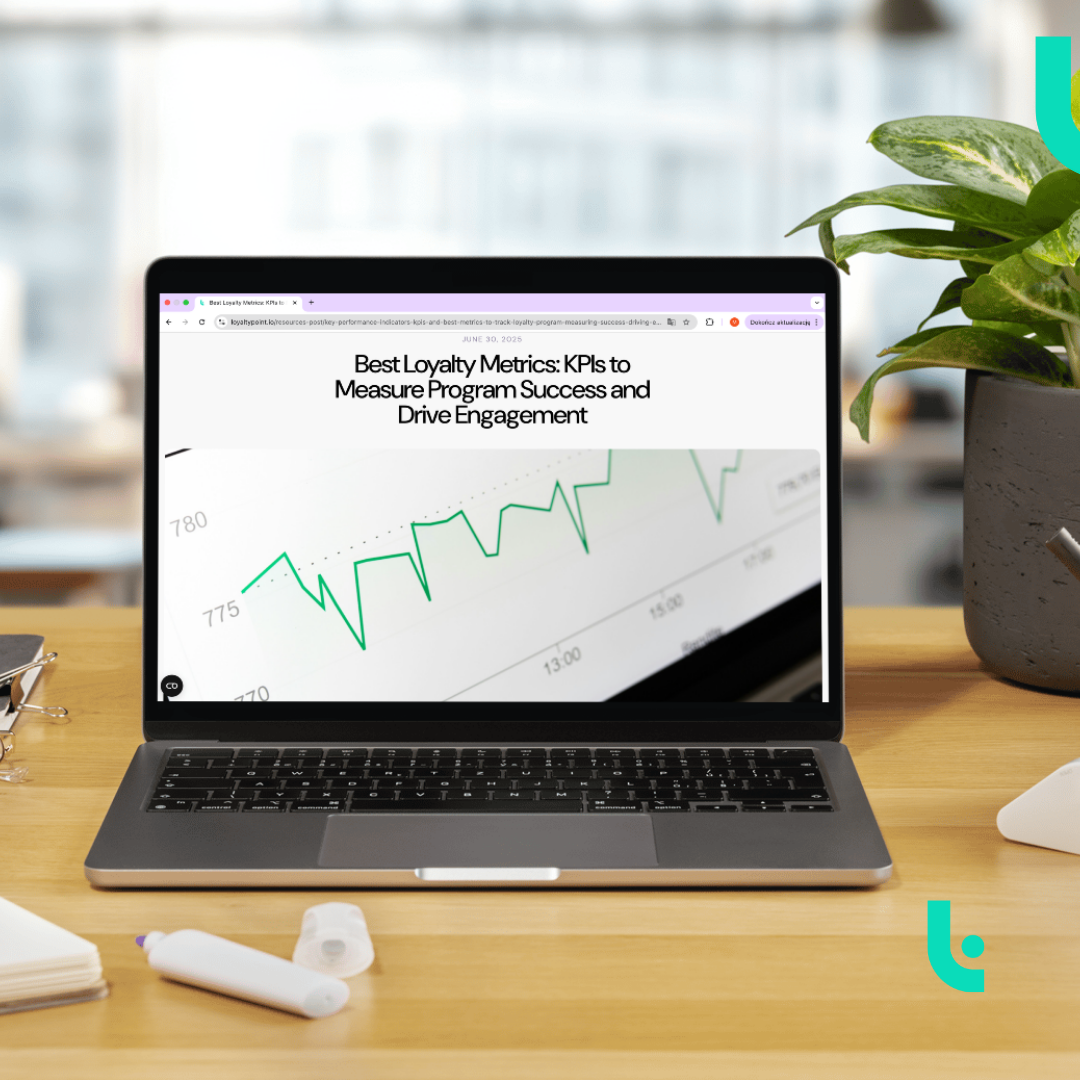
The indicators listed are not the only ones worth tracking. Initially, it’s best to focus on the basics, because without adequate security at the start, you can quickly fall out of the race for consumer attention. Depending on the complexity or maturity of the program, it’s worth expanding the list of indicators to include those that you particularly care about improving. More on methods for measuring loyalty programs can be found in article Best Loyalty Metrics: KPIs to Measure Program Success and Drive Engagement.
Loyalty That Last – Conclusion
As in a marathon, the real secret to success is the ability to maintain momentum. In the case of a loyalty program, “keeping the momentum” means keeping loyal customers with you for as long as possible. Without proper preparation, monitoring of progress and optimization of actions taken, it will be difficult to achieve the set goals. Measuring detailed loyalty program metrics is not only a control tool, but also an opportunity to increase profitability by better understanding club members’ needs. After all, transparent reporting and proof that the program is making money may determine the company’s decision whether to continue investing in the venture.
Nowadays, the brands winning customer loyalty are those treating loyalty not as a promotional vehicle but as an enterprise strategy, emotional ecosystem, and technological backbone. Reports show that satisfaction among loyalty program owners has reached historic highs, with 83% expressing confidence in program ROI – evidence that well-run, long-term models deliver measurable business value.
What does this look like when loyalty is truly embedded into a global brand’s operating model? One compelling example comes from Decathlon, whose approach demonstrates how loyalty can scale when data, experience, and long-term vision work in sync. By moving beyond transactional rewards and focusing on lifetime value, personalization, and ecosystem thinking, Decathlon shows how modern loyalty strategies translate theory into measurable impact.

The loyalty marathon is not about speed – it’s about endurance, adaptability, and a relentless commitment to understanding your customers. Programs that maintain pace through strategic evolution, data maturity, and emotional relevance will build loyalty durable enough to outlast market shifts, competitive pressures, and economic turbulence.

.jpg)